 Phoebe Lydia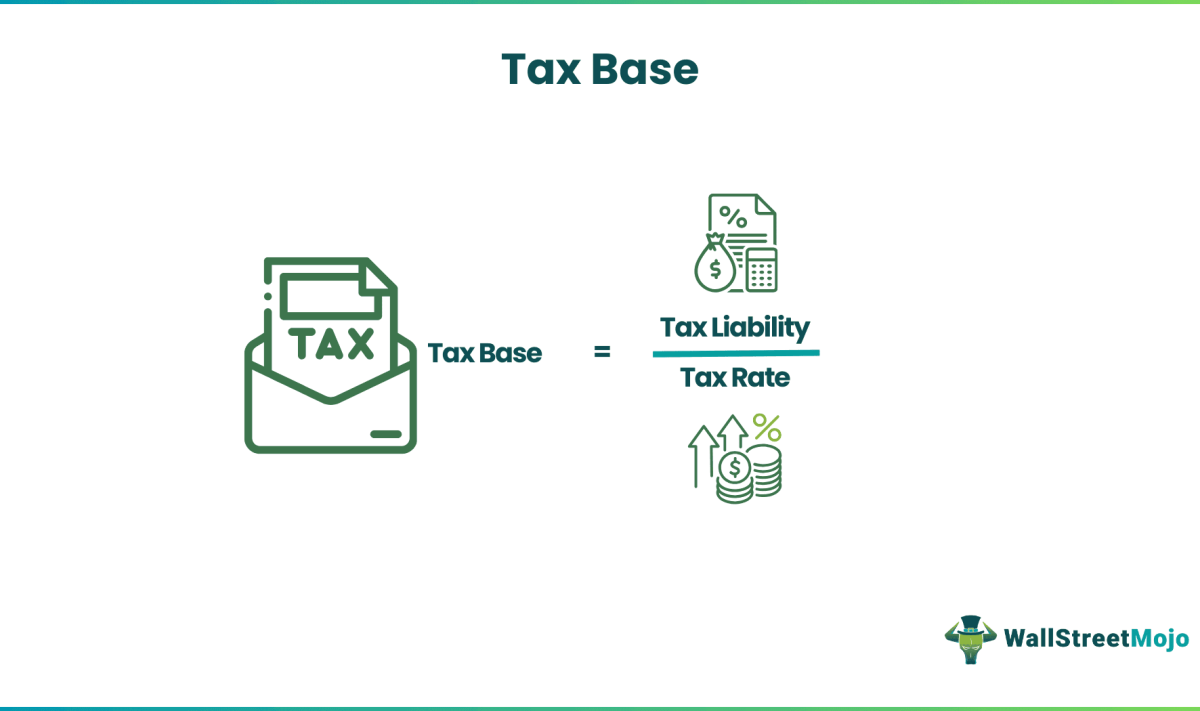
Taxable base stands as a cornerstone in the realm of taxation, shaping how individuals and businesses determine their financial obligations to tax authorities. Grasping this concept is essential, as it not only influences tax liabilities but also underpins various fiscal policies and regulations. As we delve into the intricacies of taxable base, we will uncover its significance, how it intertwines with taxable income, and the diverse forms it can take across different tax frameworks.
Understanding the taxable base helps demystify tax calculations, allowing taxpayers to navigate their responsibilities efficiently. With numerous factors at play, including jurisdictional differences and available deductions, it becomes imperative to grasp the methods and implications of accurately calculating one’s taxable base. This overview sets the stage for a detailed exploration of how taxable base influences both individual and corporate taxation.
Understanding the Concept of Taxable Base
Taxable base is a foundational concept in taxation that determines the amount of income, property, or transaction value that is subject to taxation. Understanding this concept is crucial for both taxpayers and tax professionals, as it directly impacts the calculation of tax liabilities and compliance requirements. The taxable base serves as the starting point for assessing how much tax an individual or entity must pay.
The relationship between taxable income and taxable base is integral to the tax system. Taxable income often represents the amount left after deducting allowable expenses, losses, and exemptions from gross income. In other words, the taxable base provides the figure on which tax rates are applied. This link is essential for ensuring that taxes are calculated fairly and reflect the true economic capacity of individuals and businesses.
Different Types of Taxable Bases Across Various Taxes
Several types of taxable bases exist, reflecting the diversity of tax systems worldwide. Understanding these variations helps clarify how different taxes are levied. Below are prominent examples of taxable bases for various types of taxes:
- Income Tax: The taxable base for income tax typically includes wages, salaries, bonuses, and other forms of compensation. In many jurisdictions, net income after allowable deductions and exemptions forms the taxable income base.
- Property Tax: For property taxes, the taxable base is usually the assessed value of real estate owned by an individual or business. This value may be determined by local authorities based on market conditions.
- Value Added Tax (VAT): In the case of VAT, the taxable base is the sale price of goods and services before tax is added. This base is crucial for determining the amount of VAT charged to consumers.
- Corporate Tax: The corporate tax taxable base includes the net income of a corporation, calculated after deducting business expenses, losses, and allowances. This figure is essential for assessing the tax liability of the corporation.
- Capital Gains Tax: The taxable base for capital gains tax is typically the profit made from the sale of an asset, which is calculated as the sale price minus the purchase price. This reflects the realized gain from an investment.
The taxable base is the amount on which tax rates are applied, directly influencing the tax liability of individuals and corporations.
The Importance of Accurate Taxable Base Calculation
An accurate calculation of the taxable base is crucial for both individuals and businesses, impacting their financial health and compliance with tax laws. The taxable base serves as the foundation for determining tax liability, making its precision essential to avoid legal repercussions and financial miscalculations.
Accurate taxable base calculations ensure that individuals and businesses pay the correct amount of taxes owed, contributing to effective financial planning and resource allocation. When the taxable base is reported accurately, it reflects true income or profit levels, allowing for fair contributions to society through tax revenues. However, miscalculations can lead to severe consequences, such as penalties and increased scrutiny from tax authorities.
Consequences of Underreporting or Overreporting Taxable Bases
Understanding the implications of incorrect taxable base reporting is essential for maintaining financial integrity. The consequences can vary significantly depending on whether the taxable base is underreported or overreported.
Underreporting the taxable base can result in:
-
Legal penalties and fines
– Tax authorities often impose heavy fines on individuals and businesses found guilty of tax evasion.
-
Interest on unpaid taxes
– If underreported income leads to unpaid taxes, interest accrues from the date the tax was due.
-
Increased audits
– Frequent discrepancies can trigger audits, leading to further scrutiny and potential reputational damage.
Conversely, overreporting the taxable base can:
-
Result in overpayment
– Individuals or businesses risk losing funds that could have beenallocated elsewhere.
-
Impact cash flow
– Overpayment can create cash flow issues, affecting operational capabilities.
-
Complicate future tax filings
– Mistakes in reporting can create confusion in subsequent tax periods, leading to further errors.
Role of Tax Authorities in Verifying Taxable Base Calculations
Tax authorities play a pivotal role in ensuring compliance with tax laws by verifying the accuracy of taxable base calculations. Their oversight helps maintain the integrity of the taxation system, thereby ensuring fair treatment among taxpayers.
To accomplish this, tax authorities typically:
-
Conduct audits
– Regular audits help identify discrepancies and enforce compliance.
-
Utilize data analytics
– Advanced technology allows for the detection of patterns that may indicate underreporting or overreporting.
-
Provide guidelines
– Authorities issue clear guidelines and resources to aid taxpayers in accurately determining their taxable bases.
Ultimately, the collaboration between taxpayers and tax authorities fosters a transparent and efficient tax system, where accurate taxable base calculations are fundamental for both compliance and financial stability.
Factors Influencing Taxable Base Determination
The determination of a taxable base is significantly influenced by various factors that can differ widely across different jurisdictions. Understanding these factors is essential for individuals and businesses alike, as they directly affect the amount of tax owed. A thorough grasp of what influences the taxable base enables taxpayers to optimize their financial planning and compliance strategies effectively.
Several key elements play a crucial role in how taxable bases are calculated. These include local tax laws, economic conditions, and specific deductions or exemptions that may apply. Each of these factors can either increase or decrease the taxable income reported, hence affecting the overall tax liability.
Key Factors Affecting Taxable Base
The following points highlight the primary factors that impact the determination of a taxable base:
- Jurisdictional Tax Laws: Different regions have unique tax regulations that define what constitutes taxable income. For instance, while some jurisdictions may tax all forms of income, others may offer more lenient definitions, allowing more deductions.
- Economic Conditions: Fluctuations in the economy can influence taxable income. For example, during a recession, businesses may see a decrease in revenue which can subsequently lower their taxable base.
- Deductions and Exemptions: Many jurisdictions allow for various deductions (expenses that can be subtracted from gross income) and exemptions (specific provisions that exclude certain income from taxation). These can significantly lower the taxable base. Examples include mortgage interest deductions, student loan interest deductions, and exemptions for charitable contributions.
- Filing Status: An individual’s or entity’s tax filing status can also affect the taxable base. For example, married couples filing jointly may have different deductions available to them compared to single filers.
- Industry-Specific Regulations: Certain industries may be subject to unique tax provisions that impact their taxable base. For example, agricultural businesses might have specific tax credits available that could reduce their taxable income.
“Understanding the factors influencing the taxable base can lead to better financial decisions and compliance.”
Examples of Deductions and Exemptions
Deductions and exemptions are vital components in determining a taxable base. They not only lessen the amount of taxable income but also play a critical role in tax strategy for both individuals and businesses. Here are notable examples:
- Standard Deduction: Many jurisdictions allow taxpayers to claim a standard deduction, which reduces their taxable income without the need to itemize every expense.
- Itemized Deductions: Taxpayers can choose to itemize deductions such as medical expenses, property taxes, and mortgage interest, which can provide significant tax savings.
- Capital Gains Exemption: In some cases, individuals selling their primary residence may qualify for an exemption on capital gains, thereby reducing their taxable base.
- Retirement Contributions: Contributions to certain retirement accounts, such as IRAs and 401(k)s, often reduce taxable income in the year they are made, influencing the taxable base.
- Charitable Contributions: Donations made to qualifying charities can often be deducted, lowering the income that is subject to taxation.
“Deductions and exemptions can significantly reduce the taxable base, allowing for more strategic financial management.”
Methods for Calculating Taxable Base
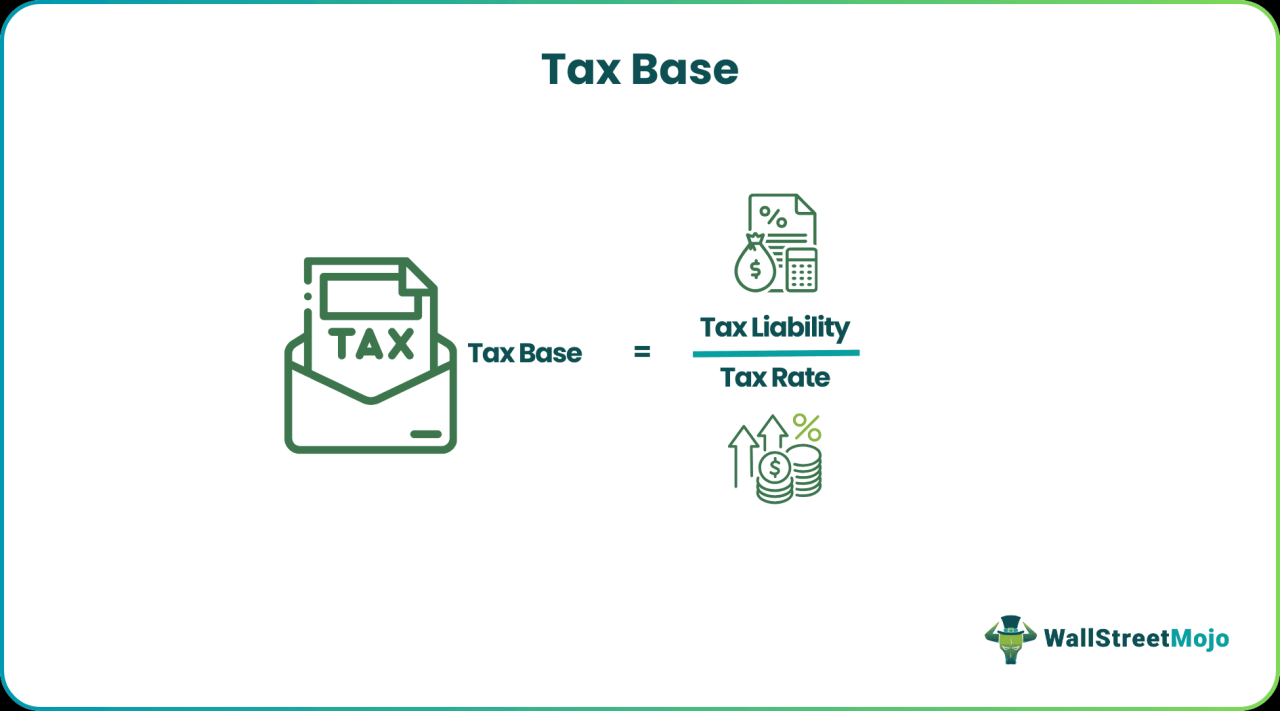
In the world of taxation, determining the taxable base is essential for both individuals and corporations. The taxable base essentially refers to the amount of income or revenue that is subject to tax. Different methods are utilized to calculate this base, and understanding these methodologies is crucial for compliance and financial planning.
There are several common methods employed in calculating the taxable base, each with its unique characteristics and applicability depending on the taxpayer’s situation. The choice of method can significantly impact the amount of tax owed, making it important for taxpayers to select the most suitable approach for their circumstances.
Common Methods for Individuals and Corporations
Individuals and corporations often use distinct methods for calculating their taxable bases. Here are the primary methods used by both:
- Actual Expense Method: This method requires taxpayers to track their actual expenses related to income generation. It is particularly useful for businesses with significant variable costs.
- Standard Deduction Method: Individuals may opt for a standard deduction, which allows them to deduct a predetermined amount from their taxable income, simplifying the process.
- Cash Basis Method: This method records income and expenses when they are actually received or paid, making it easier for smaller businesses to manage their finances.
- Accrual Basis Method: Corporations often use this method, which recognizes income and expenses when they are earned or incurred, providing a more accurate financial picture.
Comparison of Methods
Understanding the pros and cons of each method can help taxpayers make informed decisions. The following table summarizes key aspects of each calculation method:
| Method | Pros | Cons |
|---|---|---|
| Actual Expense Method | Provides precise deduction amounts based on real expenses. | Time-consuming and requires meticulous record-keeping. |
| Standard Deduction Method | Simplifies filing and reduces paperwork. | May not maximize potential deductions for higher earners. |
| Cash Basis Method | Easier for small businesses; matches cash flow. | May distort financial picture if large amounts of credit are involved. |
| Accrual Basis Method | Provides a comprehensive view of financial health. | More complex and requires advanced accounting systems. |
Best Practices for Calculating Taxable Base
To optimize the calculation of the taxable base, businesses can adopt several best practices. These practices not only ensure compliance but also promote better financial management:
- Maintain clear and organized records of all financial transactions to facilitate accurate calculations.
- Utilize accounting software designed for tax calculations to minimize errors and save time.
- Regularly review and update financial policies and procedures to align with current tax regulations.
- Consult with tax professionals to ensure adherence to the latest tax laws and to identify potential strategies for tax savings.
Accurate calculation of the taxable base is essential for effective tax planning and compliance with regulatory requirements.
Taxable Base in Different Tax Regimes
Understanding the taxable base is crucial for both individuals and businesses, as it serves as the foundation upon which taxes are calculated. Different tax regimes across jurisdictions can significantly impact how this base is determined, leading to variations in tax obligations. This section explores how taxable bases differ across various types of taxes, including income tax, property tax, and sales tax, as well as the strategies employed by multinational corporations to navigate these differences.
Variations Across Tax Types
The taxable base can vary significantly depending on the type of tax being levied. Each tax regime has its own method for calculating taxable income or value, which in turn influences the tax liability for individuals and entities.
- Income Tax: This tax is usually based on an individual’s or corporation’s net income. The taxable base is calculated by taking gross income and subtracting allowable deductions, such as business expenses or personal exemptions. For example, in the United States, corporate tax rates apply to taxable income after all deductions are accounted for.
- Property Tax: Property taxes are typically assessed based on the value of the real estate owned. The taxable base is often determined by an appraisal of the property’s market value. Local municipalities may apply different rates depending on property types, leading to variations in tax bills even for similar properties.
- Sales Tax: Sales tax is calculated on the sale price of goods and services. The taxable base is generally the total sale amount before any discounts or exemptions. For instance, a state may exempt certain food items from sales tax, which alters the taxable base for retailers selling those goods.
Multinational Corporations and Taxable Bases
Multinational corporations (MNCs) operate in various countries, each with distinct tax laws and regulations that affect their taxable base. To optimize their global tax responsibilities, these corporations often engage in strategic planning that includes transfer pricing, tax credits, and international treaties.
- For example, a technology company operating in both the United States and Ireland may benefit from the lower corporate tax rates in Ireland. This could lead to a strategic allocation of profits to the subsidiary in Ireland, thereby reducing the overall taxable base in higher-tax jurisdictions.
- Furthermore, MNCs often utilize tax treaties between countries to avoid double taxation, thus affecting their effective taxable base. These treaties help clarify which country has the right to tax certain profits or income, ensuring that corporations do not pay taxes on the same income twice.
Importance of Understanding Local Tax Laws
For accurate reporting of the taxable base, a thorough understanding of local tax laws is imperative. Each jurisdiction has its own regulations regarding deductions, exemptions, and credits that can alter the taxable base significantly.
Understanding local tax laws can lead to more accurate assessments and compliance, ultimately reducing the risk of audits and penalties.
- Failure to recognize specific local deductions or tax incentives may result in over-reporting taxable income, leading to higher tax liabilities. Businesses should consult local tax professionals to ensure compliance and optimize their tax positions.
- Moreover, local laws might dictate different tax rates for various income types, such as capital gains versus ordinary income. This further emphasizes the need for precise knowledge of the applicable tax regulations.
Challenges in Taxable Base Compliance
Taxable base compliance is an essential aspect of tax regulation that many taxpayers face. Understanding the complexities involved in calculating and reporting taxable bases can be daunting. Various factors, including legal requirements and financial regulations, contribute to the challenges of maintaining compliance, often leading to confusion and potential penalties.
The landscape of tax regulations can be intricate, with frequent changes and varying interpretations across different jurisdictions. Taxpayers must navigate these complexities to ensure accurate reporting of their taxable base. Failing to comply can result in miscalculations, exposing taxpayers to audits and fines. Additionally, the lack of clarity in certain regulations can hinder the ability to assess tax obligations effectively.
Common Challenges for Taxpayers
Taxpayers encounter several common challenges when striving to comply with taxable base requirements. These challenges can include:
- Complex Regulatory Framework: Tax laws can vary significantly between jurisdictions, making it difficult for taxpayers to remain informed and compliant.
- Frequent Changes in Legislation: Regular updates to tax laws can create uncertainty, requiring taxpayers to continuously adjust their compliance strategies.
- Inadequate Record-Keeping: Proper documentation is crucial for accurate taxable base reporting; however, many taxpayers struggle with maintaining comprehensive records.
- Misinterpretation of Tax Laws: Ambiguous language in tax regulations can lead to misinterpretation, resulting in incorrect reporting.
- Resource Constraints: Smaller businesses may lack the financial or human resources necessary to navigate the complexities of tax compliance effectively.
The impact of complex tax regulations on accurate taxable base reporting cannot be underestimated. Taxpayers often find themselves overwhelmed by the sheer volume of information, leading to potential errors in their calculations.
Strategies for Overcoming Compliance Obstacles
To navigate the challenges associated with taxable base compliance, taxpayers can implement various strategies that enhance their reporting processes. These strategies include:
- Investing in Professional Assistance: Engaging tax professionals or consultants can provide valuable insights and help ensure compliance with the latest regulations.
- Utilizing Technology: Advanced software solutions can streamline record-keeping and reporting processes, reducing the chances of error.
- Staying Informed: Regular training sessions and updates on tax legislation can help taxpayers keep abreast of changes that may impact their compliance obligations.
- Developing Robust Documentation Practices: Establishing a systematic approach to record-keeping can mitigate risks associated with inadequate documentation.
- Creating a Compliance Calendar: A dedicated schedule for tracking tax deadlines and compliance requirements can help taxpayers stay organized and informed.
By adopting these strategies, taxpayers can improve their ability to comply with taxable base requirements and reduce the likelihood of encountering obstacles in the future.
Future Trends in Taxable Base Legislation
As we look ahead, the landscape of taxable base legislation is poised for significant transformation. Various factors, including technological advancements, shifts in global economic dynamics, and evolving public policy, are set to influence how taxable bases are determined and calculated. Understanding these trends can provide valuable insights for businesses and policymakers alike.
Potential Changes in Legislation
In the near future, we could witness several legislative changes impacting how taxable bases are calculated. Governments around the world are increasingly scrutinizing tax compliance and revenue generation, leading to potential reforms. Key areas to watch include:
- Base Erosion and Profit Shifting (BEPS) Initiatives: Governments are likely to implement stricter rules to combat tax avoidance, which could redefine taxable bases for multinational corporations.
- Digital Services Taxes: With the rise of digital businesses, various countries may introduce or enhance taxes specifically targeting digital services, affecting how revenue is recognized and taxed.
- Environmental and Sustainability Taxes: As governments prioritize sustainability, new tax measures may be introduced that alter the taxable base to encourage eco-friendly practices.
Role of Technology and Data Analytics
Technology and data analytics are increasingly playing a pivotal role in shaping the future of taxable base determination. The integration of advanced software and analytical tools allows for more precise tax assessments and compliance tracking. Here are notable impacts of technology in this area:
- Real-Time Data Processing: Tax authorities can utilize real-time data analytics to monitor compliance and identify discrepancies in taxable bases more efficiently.
- Artificial Intelligence (AI): AI can enhance predictive modeling for tax assessments, providing insights that lead to more accurate taxable base calculations.
- Blockchain Technology: The use of blockchain could offer unprecedented transparency and security in tax reporting, facilitating better tracking of transactions that impact taxable bases.
Influence of Globalization on Tax Regulations
Globalization is reshaping the regulatory environment for taxable bases around the world. As businesses operate across borders, tax regulations must adapt to ensure fair taxation and compliance. The following factors highlight the impact of globalization:
- Cross-Border Tax Treaties: Expanding international agreements will likely influence how taxable bases are determined, particularly with respect to profits earned in multiple jurisdictions.
- Harmonization of Tax Rules: There is a growing trend toward harmonizing tax rules internationally, which may simplify compliance while adjusting taxable bases to align with global standards.
- Increased Competition for Investment: Countries may adjust their tax structures, including taxable bases, to attract foreign investment, possibly leading to lower tax rates and broader bases.
Ending Remarks
In summary, the concept of taxable base is not just a technical term; it represents the foundation upon which tax compliance and planning are built. By understanding its calculation methods, implications, and the challenges that may arise, taxpayers can better position themselves for success in their financial endeavors. As we look to the future, staying informed about legislative changes and technological advancements will be crucial in navigating the evolving landscape of taxable bases.
Q&A
What exactly is a taxable base?
A taxable base is the amount of income or value upon which a tax is levied, determining how much tax a taxpayer owes.
How does taxable base differ from taxable income?
Taxable income is typically a subset of the taxable base, representing the portion of income that is subject to tax after deductions and exemptions.
Why is accurate calculation of taxable base important?
Accurate calculation ensures compliance with tax laws, helps avoid penalties, and supports proper financial planning.
What are common deductions that affect taxable base?
Common deductions include business expenses, charitable contributions, and mortgage interest, which can reduce the taxable base.
How do different jurisdictions affect taxable base calculations?
Different jurisdictions may have unique rules and regulations, resulting in varying taxable bases for similar types of income or assets.
What role does technology play in taxable base determination?
Technology enhances data collection and analysis, enabling more accurate and efficient calculations of taxable bases.