
 Phoebe Lydia
Tax refunds are often seen as a windfall for many individuals, but understanding their intricacies is essential for effective personal finance management. Getting a tax refund isn’t just about receiving money; it’s about being informed and strategic in your financial planning. A tax refund can influence your budgeting, savings goals, and even future investments, thereby playing a crucial role in shaping your overall financial health.
By grasping the fundamentals of tax refunds, you can make informed decisions that maximize your financial benefits. Knowing the filing process, types of refunds available, and strategies to optimize your return empowers you to take charge of your finances. With the right knowledge, you can transform potential tax refunds into stepping stones towards greater financial stability.
The Importance of Understanding Tax Refunds in Personal Finance
Having a clear grasp of tax refunds is essential for effective financial planning. Tax refunds, often viewed as a windfall, can significantly influence an individual’s financial health when approached with the right mindset. Understanding how tax refunds work allows individuals to make informed decisions about budgeting, saving, and investing their funds. By knowing the potential implications of receiving a tax refund, individuals can leverage this financial tool to enhance their personal finance strategies, ultimately leading to stronger, more resilient financial situations.
Tax refunds can play a pivotal role in shaping budgeting and saving strategies. When individuals comprehend the full scope of their potential refunds, they are better positioned to allocate these funds judiciously. For instance, many individuals receive refunds due to over-withholding throughout the year. Rather than treating this refund as extra spending money, it can be harnessed to meet pressing financial goals. Individuals often use their refunds to pay down debt, build an emergency fund, or contribute to retirement accounts, all of which can have long-lasting positive impacts on their financial stability.
Impact on Budgeting and Savings
Understanding tax refunds directly influences how individuals approach their financial planning. Here are several ways tax refunds can enhance budgeting and savings:
- Debt Reduction: Many individuals choose to apply their tax refund to outstanding debts. For instance, someone might use their $2,000 refund to pay down credit card debt, which ultimately reduces interest payments and improves credit scores.
- Emergency Savings: A common strategy is to allocate a portion of the tax refund into an emergency fund. If a person receives a typical refund of $3,000, they might deposit $1,500 into a savings account, providing a financial cushion for unexpected expenses.
- Investing for the Future: Some individuals utilize tax refunds as a boost to their investment accounts. For example, investing a $2,500 refund into a retirement account can compound significantly over time, potentially leading to a more secure retirement.
- Home Improvements: Tax refunds can also be directed toward home improvements or repairs, increasing property value. A refund of $5,000 could finance essential renovations, providing both immediate benefits and long-term value.
“Utilizing tax refunds wisely can transform a temporary financial boost into lasting wealth.”
By recognizing the significance of tax refunds, individuals can adopt better financial practices that lead to improved budgeting and saving outcomes. The benefits of understanding this aspect of personal finance extend far beyond the immediate gratification of a refund, enabling smarter financial decisions that contribute to long-term stability and growth.
The Process of Filing for a Tax Refund
Filing for a tax refund can seem daunting, but breaking it down into manageable steps makes the process smoother. Understanding the required documents and common pitfalls can further simplify your experience. Here’s an overview of how to navigate the process effectively.
The first step in filing for a tax refund involves gathering all necessary documentation to support your claim. This documentation serves as evidence of your income, deductions, and credits. It is critical to ensure accuracy in your filing to avoid delays or denials.
Necessary Documents for Tax Refund Application
Having the right paperwork ready ensures a seamless filing process. Here are the essential documents you will need:
- W-2 Forms: For employed individuals, these forms report your annual wages and the taxes withheld from your paycheck.
- 1099 Forms: If you’re self-employed or have received other income (like freelance work or interest), these forms document that money.
- Receipts for Deductions: Keep track of receipts for deductible expenses such as medical bills, charitable contributions, and business expenses.
- Tax Return from Previous Year: Having last year’s return can help you see what deductions and credits you claimed previously.
- Bank Account Information: For direct deposit of your refund, you’ll need your account and routing numbers.
Avoiding common mistakes during the filing process can save you time and hassle. Many individuals overlook critical aspects that can jeopardize their refund.
Common Mistakes to Avoid During the Filing Process
Understanding typical errors can help you submit a more accurate and straightforward tax return. Here are frequent missteps to watch out for:
- Incorrect Social Security Number: Ensure that your Social Security number is accurate, as any discrepancies can delay processing.
- Missing Signatures: Always double-check that you’ve signed and dated your tax return.
- Math Errors: Simple arithmetic mistakes can lead to incorrect refund amounts or delays; using tax software can help minimize this risk.
- Filing Status Errors: Choosing the wrong filing status can affect your tax rate and available deductions.
- Ignoring State Taxes: Ensure compliance with state tax regulations, as they can differ significantly from federal requirements.
Different Types of Tax Refunds Available to Taxpayers
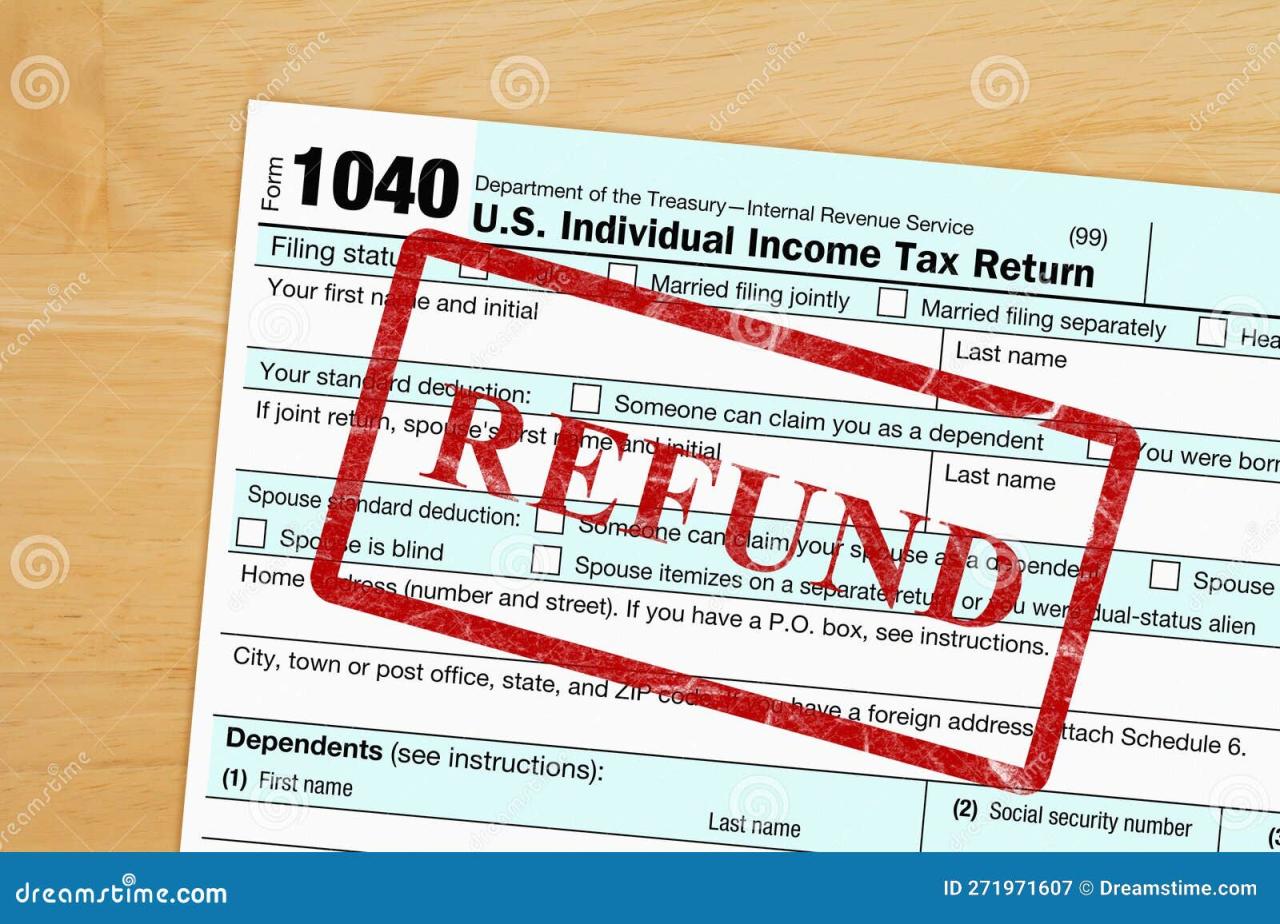
Tax refunds represent a significant aspect of personal finance, providing taxpayers with an opportunity to reclaim money previously paid to the government. Understanding the various types of tax refunds is essential for maximizing potential returns. Different levels of government—federal, state, and local—offer distinct refund options based on their specific tax codes and regulations. Each type comes with its own eligibility criteria and considerations regarding refundable and non-refundable tax credits.
Types of Tax Refunds
Taxpayers can receive refunds at various levels, primarily categorized into federal, state, and local refunds. Each type has its own set of rules and eligibility requirements.
- Federal Tax Refunds: The federal government offers refunds primarily through the Internal Revenue Service (IRS). Taxpayers may receive a federal tax refund if they have overpaid on their federal income taxes, often due to withholding excess from their paychecks or qualifying for tax credits such as the Earned Income Tax Credit (EITC).
For example, in 2022, the average federal tax refund was approximately $3,200.
- State Tax Refunds: Each state has its own tax regulations and refund system. Taxpayers may receive state tax refunds similar to federal refunds when they overpay state income taxes or qualify for state-specific credits. Eligibility varies widely by state, affecting the amount and frequency of refunds.
In California, for instance, taxpayers can receive a state refund if they file their taxes accurately and meet state tax obligations.
- Local Tax Refunds: Some municipalities impose local taxes, including income or property taxes. Local tax refunds can occur if a taxpayer overpays or if local tax laws mandate refunds under specific circumstances. Eligibility often depends on local ordinances and tax assessments.
For instance, in Chicago, property tax refunds may be available for homeowners meeting certain criteria.
Eligibility Criteria for Refunds
Understanding eligibility for each type of tax refund is crucial for taxpayers.
- Federal Refunds: Eligibility hinges on filing status, income level, and tax credits claimed. Taxpayers must file their returns accurately and on time to qualify.
- State Refunds: Criteria differ by state; however, they generally require a completed state tax return with accurate income reporting and adherence to state laws.
- Local Refunds: Local tax refunds depend on municipal regulations, typically requiring proof of overpayment or compliance with specific local tax incentives.
Refundable and Non-Refundable Tax Credits
Tax credits play a pivotal role in determining refund amounts. They can be categorized as refundable or non-refundable.
Refundable tax credits allow taxpayers to receive a refund beyond their tax liability. For instance, if a taxpayer qualifies for a refundable credit of $1,500 and has a tax liability of $1,000, they would receive a $500 refund.
Non-refundable tax credits only reduce tax liability to zero; hence, any excess credit is not refunded. For example, if a taxpayer has a $1,000 tax liability and qualifies for a $1,500 non-refundable credit, the maximum refund is $1,000—no additional amount will be refunded.
Understanding the distinctions between these credits is essential for maximizing potential tax refunds and ensuring compliance with tax regulations.
Timeframes for Receiving Your Tax Refund
Tax season can be filled with anticipation, especially when it comes to receiving your tax refund. Understanding the typical timelines for processing these refunds can help manage expectations and plan accordingly. Generally, the timeframe for receiving a tax refund can vary widely based on different factors, including how the tax return was filed and the complexity of the return itself.
The IRS usually processes tax refunds within 21 days of the return being accepted. However, this is just an estimate, and several variables can influence the actual timeline. For instance, e-filing generally results in faster processing compared to paper filing, which can take much longer due to mailing times and additional manual processing. Furthermore, if your return includes errors, is incomplete, or requires further review, this can lead to significant delays.
Factors Influencing Tax Refund Timelines
It’s important to be aware of scenarios that may lead to delays in receiving your tax refund. Here is a table summarizing various situations that could extend the wait time:
| Scenario | Delay Reason |
|---|---|
| Filing Paper Returns | Longer processing time due to manual handling |
| Errors on the Return | Requires additional review and correction |
| Claiming Certain Credits | Credits like the Earned Income Tax Credit may trigger extra scrutiny |
| Missing Information | Incomplete forms can lead to requests for additional documentation |
| Identity Verification Issues | Potential delays during the verification process |
If taxpayers experience a delay in receiving their refund, there are several steps they can take. First, utilizing the IRS “Where’s My Refund?” tool can provide real-time updates on the status of the refund. Additionally, it’s advisable to allow the IRS a full 21 days before reaching out for assistance, as many refunds are processed within this timeframe. If more time has passed and the refund is still unreceived, contacting the IRS directly can help clarify any issues or concerns. Also, keeping documentation on hand, such as the tax return and any correspondence with the IRS, can expedite the resolution process. Ensuring all information is accurate and complete when filing can help mitigate delays and ensure a smoother refund experience.
How to Track Your Tax Refund Status
Tracking your tax refund status is an important step in the tax filing process. It allows you to stay informed about when you can expect your refund, while also ensuring that there are no issues with your tax return. Knowing how to effectively track your refund helps ease any anxieties and ensures timely communication with tax authorities if needed.
There are several methods available for tracking the status of your tax refund. Most commonly, taxpayers can use online tools provided by the IRS or their respective state tax authorities. Additionally, phone services and mobile applications offer convenient ways to stay updated on your refund status. Each method has its benefits, and choosing the right one can enhance your tracking experience.
Online Tools for Tracking
Using online tools is one of the most efficient ways to track your tax refund status. The IRS and many state tax agencies have dedicated websites where you can check the status of your refund. Here’s a step-by-step guide on how to do this:
1. Visit the Official IRS Website: Go to the IRS website at www.irs.gov.
2. Locate the ‘Where’s My Refund?’ Tool: On the home page, find the “Tools” section and select “Where’s My Refund?” This tool is available 24/7 and is designed to provide updates on your tax refund status.
3. Enter Your Details: You will need to input your Social Security number, filing status, and the exact amount of your refund. Ensure that these details are accurate to avoid any issues.
4. Submit Your Information: After entering your details, click on the “Submit” button. The tool will then display your refund status, which could be one of the following:
– Received
– Approved
– Sent
5. Review Updates Regularly: It’s recommended to check back every few days, especially during peak tax season, as updates may vary.
Should you encounter any issues while tracking your refund, effective communication with tax authorities is crucial. Always have your tax information ready when reaching out, including your Social Security number and filing details. If you call the IRS, be prepared for potential wait times. It’s often best to call early in the morning or late in the afternoon for shorter wait times. When speaking with an agent, clearly explain your issue and note any reference numbers provided for future inquiries.
Tracking your tax refund using these methods not only keeps you informed but also empowers you to address any concerns that may arise along the way.
Strategies for Maximizing Your Tax Refund
Understanding the various strategies to maximize your tax refund can lead to significant financial benefits. With the right planning, individuals can take advantage of deductions and credits, potentially increasing their refunds substantially. This section will explore actionable strategies and provide real-life examples to illustrate effective tax refund maximization.
Tax deductions and credits are crucial elements in determining your overall tax refund. Deductions lower your taxable income, while credits directly reduce the amount of tax owed. Both can significantly influence refund amounts, allowing you to keep more of your hard-earned money.
Key Strategies for Maximizing Tax Refund
To maximize your tax refund, consider the following strategies that focus on leveraging deductions and credits:
- Organize Financial Records: Keeping detailed records of income, expenses, and receipts throughout the year makes it easier to claim deductions and credits.
- Explore Educational Credits: If you or a dependent is enrolled in higher education, consider taking advantage of the American Opportunity Credit or the Lifetime Learning Credit. These can dramatically reduce your tax bill.
- Itemize Deductions: If your eligible expenses exceed the standard deduction, itemizing allows you to claim various deductions, such as mortgage interest, state taxes, and charitable donations.
- Maximize Retirement Contributions: Contributing to retirement accounts like a 401(k) or an IRA can yield significant tax deductions, enhancing your cash flow during tax season.
- Utilize Health Savings Accounts (HSAs): Contributions to HSAs are tax-deductible, and funds used for qualified medical expenses can be tax-free, providing another avenue for reducing taxable income.
- Stay Informed About Tax Law Changes: Understanding recent tax law changes can help you identify new credits and deductions, ensuring you don’t miss any opportunities.
By actively managing your finances and staying informed about tax-saving opportunities, you can significantly increase your tax refund.
Case Studies of Successful Refund Maximization
Examining real-life examples can provide insight into effective tax refund strategies.
One individual, Sarah, a college student, maximized her tax refund by leveraging the American Opportunity Tax Credit. With qualified tuition and expenses, she managed to receive a refund of $2,500, which significantly alleviated her financial burdens.
Another example is Mark, a small business owner who meticulously documented his business expenses throughout the year. By itemizing deductions related to his home office, vehicle use, and work-related supplies, Mark was able to secure a refund of $3,000, thanks to the deductions he claimed, which provided a considerable boost to his finances.
These case studies illustrate that with careful planning and attention to detail, individuals can effectively increase their tax refunds, allowing them to use those funds for saving, investing, or paying off debts.
The Psychological Impact of Receiving a Tax Refund
Receiving a tax refund can evoke a variety of emotions and have a significant influence on an individual’s psychological well-being. For many, the arrival of a tax refund is synonymous with relief, excitement, and a sense of accomplishment. It often represents a tangible reward for the diligent work put in throughout the year, leading to a boost in self-esteem and overall happiness. This moment can serve as a psychological reset, allowing individuals to feel financially empowered, even if only temporarily.
The psychological effects of receiving a tax refund can be profound. When individuals find themselves unexpectedly receiving money, such as through a tax refund, they often experience a rush of positive emotions. Many feel a sense of relief, especially if the refund helps ease financial pressures or debts. This feeling of relief is often accompanied by excitement, as many people view their refund as an opportunity to indulge in purchases or experiences they may have postponed.
This psychological uplift can lead to a more optimistic outlook on life. For instance, a family may choose to use their refund to take a vacation, which not only strengthens family bonds but also creates lasting memories. Financial planning experts suggest that individuals can leverage their refunds to enhance their overall financial health. Rather than solely treating themselves, they can allocate a portion of their refund toward savings, debt repayments, or investments.
Utilizing Tax Refunds for Financial Health
By strategically using tax refunds, individuals can make a significant impact on their long-term financial well-being. Here are some constructive options for utilizing tax refunds:
- Emergency Fund: Establishing or adding to an emergency fund can provide a safety net for unforeseen expenses, fostering a sense of security and peace of mind.
- Debt Repayment: Paying down high-interest debt can alleviate financial stress and improve credit scores, leading to more advantageous borrowing conditions in the future.
- Investments: Investing in stocks, bonds, or retirement accounts can build wealth over time and enhance long-term financial stability.
- Education or Skill Development: Investing in personal development, such as courses or certifications, can enhance career prospects and lead to higher earning potential.
Incorporating these strategies not only enhances the psychological benefits associated with receiving a tax refund but also leads to more sustainable financial health. By embracing a proactive approach, individuals can turn their tax refunds into a stepping stone towards greater financial empowerment and emotional well-being.
Common Misconceptions About Tax Refunds
Many individuals have misconceptions about tax refunds that can lead to poor financial decisions. These misunderstandings can affect how one manages their finances throughout the year. Instead of viewing a tax refund as a straightforward reimbursement, it’s important to clarify what a tax refund actually represents and its implications on overall financial health.
One common misconception is that a tax refund is “free money.” This belief can create a false sense of security, leading people to spend their refunds frivolously instead of using them to pay off debt or save for emergencies. In reality, a tax refund is merely a reflection of overpayment of taxes throughout the year. The money was already yours, and receiving it back doesn’t equate to a windfall.
Another prevalent myth is that getting a large refund is a sign of good financial management. Many believe that the more substantial the refund, the better they managed their tax withholdings. However, this mindset can lead to financial mismanagement, as it often means that individuals have had less money available throughout the year for savings or investment opportunities. The key is to optimize withholdings to ensure that individuals keep more of their earnings in their control.
To illustrate how correcting these misconceptions can enhance financial decisions, consider the following points:
Impacts of Misconceptions on Financial Management
Understanding the true nature of tax refunds can lead to more strategic financial planning. Here are some insights:
- Budgeting Improvement: Recognizing that refunds are essentially pre-paid taxes can encourage better budgeting throughout the year, allowing individuals to allocate funds for savings or investments instead of waiting for a refund.
- Debt Reduction: Realizing that a tax refund is not a bonus can urge people to prioritize paying down high-interest debts, thus improving their overall financial health.
- Investment Opportunities: Instead of thinking of a refund as a windfall, people can use the funds to invest in retirement accounts or other financial instruments that can generate long-term wealth.
“Understanding that a tax refund is not free money can lead to better financial decisions.”
By addressing these misconceptions, individuals can take proactive steps toward improving their financial literacy and making more informed decisions with their money.
Last Word

In conclusion, tax refunds are more than just a simple return of overpaid taxes; they represent an opportunity to enhance your financial situation significantly. By understanding the filing process, the types of refunds available, and the psychological aspects associated with receiving one, you can make the most of this financial resource. As you move forward, remember that being proactive and informed is key to unlocking the full potential of your tax refunds, leading to a healthier financial future.
Question & Answer Hub
What is a tax refund?
A tax refund is the amount of money returned to a taxpayer when their tax payments exceed their total tax liability for the year.
How long does it take to receive a tax refund?
The typical timeframe for receiving a tax refund can vary but usually takes about 21 days if filed electronically and without issues.
Can I track my tax refund status?
Yes, you can track your tax refund status online through the IRS website or via their mobile app.
What should I do if my tax refund is delayed?
If your tax refund is delayed, you should check the status online and contact the tax authority for assistance if necessary.
Are tax refunds taxable?
No, tax refunds are not taxable as they are simply the return of overpaid taxes.
What are common reasons for tax refund delays?
Common reasons for delays include errors on your tax return, incomplete information, or identity verification issues.