
 Phoebe Lydia
Import duty is a crucial element in international trade, influencing everything from government revenue to consumer prices. As countries navigate the complexities of globalization, understanding import duty becomes essential for businesses and consumers alike. This duty is essentially a tax imposed on goods brought into a country, serving not only as a means of revenue for the government but also playing a significant role in protecting local industries.
In this exploration, we will delve into how import duty is calculated, the role of customs authorities, and the broader economic implications it holds. We will also discuss recent trends and potential future shifts in regulations, making this a comprehensive guide for anyone interested in the dynamics of import duty in today’s interconnected world.
Understanding the Concept of Import Duty
Import duty, also known as customs duty, is a tax imposed by governments on the importation of goods from other countries. This duty plays a crucial role in international trade, serving not only as a source of government revenue but also as a mechanism to protect domestic industries from foreign competition. By understanding the nuances of import duty, businesses and consumers can navigate the complexities of global trade more effectively.
The significance of import duty in international trade cannot be overstated. It directly influences the cost of imported goods, which in turn can affect market prices, consumer choices, and even the overall economy. Governments often rely on these duties as an essential source of revenue, which can help fund public services and infrastructure. For instance, in the United States, customs duties accounted for a substantial portion of total federal revenues, demonstrating how integral they are to fiscal policy.
Impact of Import Duty on Consumer Prices
The relationship between import duty and consumer prices is significant, as these duties can lead to higher costs for imported products. When a government imposes an import duty, the additional cost is typically passed on to consumers, influencing their purchasing decisions.
For example, if a country imposes a 10% import duty on electronics, the price of a smartphone costing $300 would increase to $330 for consumers. This price adjustment can deter consumers from purchasing imported goods, prompting them to seek local alternatives or delay their purchases.
- In the European Union, tariffs on imported cars may result in higher prices for luxury vehicles, driving consumers towards domestic brands.
- Similarly, a 25% tariff on imported steel can increase construction costs, affecting the pricing of new homes and infrastructure projects.
- During trade disputes, such as the U.S.-China trade tensions, import duties can lead to significant price hikes on everyday consumer goods, impacting the overall cost of living.
Import duties not only serve as a revenue stream but also protect local industries by making imported goods more expensive, thereby encouraging consumers to consider domestic products.
Ultimately, the dynamics of import duty reflect broader economic policies and strategies, shaping consumer behavior and influencing market competition.
The Calculation of Import Duty
Import duty is a critical aspect of international trade, impacting the cost of goods brought into a country. Understanding how to calculate import duty is essential for businesses and individuals involved in importing products. Various methods and factors come into play when determining the final import duty, ensuring compliance with local regulations and trade agreements.
Methods Used to Calculate Import Duty
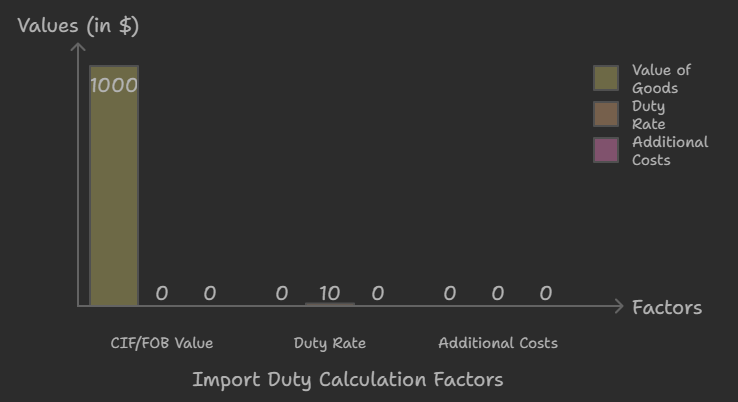
Calculating import duty involves specific methods that reflect the nature of the goods and their value. The two primary methods are ad valorem and specific duties, each with its own calculation approach based on different criteria.
- Ad Valorem Duty: This method calculates import duty as a percentage of the total value of the goods. It is commonly used for most products, allowing the duty to adjust with changes in item value. The formula is:
Import Duty = Total Value of Goods x Duty Rate (%).
- Specific Duty: This method applies a fixed amount of duty based on the quantity or weight of the goods, irrespective of their value. For example, a set dollar amount might be charged per kilogram of a product. The formula is:
Import Duty = Quantity of Goods x Specific Duty Rate.
The choice between ad valorem and specific duties often depends on the product type, trade agreements, and local regulations.
Step-by-Step Example of Import Duty Calculation
To illustrate how import duty is calculated, consider an example involving the import of a luxury watch valued at $2,000 with an ad valorem duty rate of 10%.
1. Determine the Total Value of Goods: The value of the watch is $2,000.
2. Identify the Duty Rate: The ad valorem duty rate is 10%.
3. Apply the Formula for Ad Valorem Duty:
Import Duty = Total Value of Goods x Duty Rate (%)
Substituting the known values gives:
Import Duty = $2,000 x 0.10 = $200.
4. Total Cost Calculation: The total cost of importing the watch would then be the initial value plus the import duty:
Total Cost = Total Value of Goods + Import Duty
Total Cost = $2,000 + $200 = $2,200.
This calculation showcases how import duty affects the overall expense when importing goods, highlighting the importance of understanding duty rates and methods for anyone engaged in international trade.
The Role of Customs Authorities in Import Duty
Customs authorities play a pivotal role in the enforcement and regulation of import duties, ensuring that all imported goods comply with national laws and international agreements. Their functions extend beyond mere collection of duties; they are crucial in maintaining the integrity of trade and protecting the economy from illegal practices.
The responsibilities of customs authorities in enforcing import duty regulations include a variety of tasks aimed at ensuring compliance among importers. They are tasked with monitoring the flow of goods across borders, collecting tariffs and taxes, and preventing smuggling and fraud. Additionally, customs officials must ensure that imports adhere to specific safety, health, and environmental standards. This comprehensive approach helps safeguard the nation’s economy and public welfare.
Responsibilities of Customs Authorities
Customs authorities have several key responsibilities when it comes to enforcing import duty regulations. These responsibilities include:
- Monitoring Imports: Customs officials inspect shipments to verify that declared goods match the actual products being imported, ensuring accurate duty assessments.
- Collecting Duties: They are responsible for calculating and collecting import duties from businesses, which includes applying the correct tariff classifications and rates.
- Ensuring Compliance: Customs authorities implement checks to ensure that importers adhere to regulations, including proper documentation and payment of duties.
- Preventing Smuggling: They engage in intelligence gathering and risk assessment to detect and deter illegal smuggling activities that undermine trade regulations.
- Facilitating Trade: By streamlining processes and utilizing technology, customs authorities work to facilitate legitimate trade while maintaining security and compliance.
Assessment of Compliance Among Importers
Customs authorities assess the compliance of importers through various mechanisms designed to ensure that businesses follow import regulations. These assessments can be categorized as follows:
- Documentation Review: Customs officials rigorously review import documentation, including invoices, bills of lading, and certificates of origin to ensure accuracy and legitimacy.
- Physical Inspections: Random inspections of shipments are conducted to verify that the goods match recorded details and comply with safety and regulatory standards.
- Risk Management: Customs authorities use risk profiling tools to identify high-risk shipments that may require more thorough examination and verification.
- Post Clearance Audits: Audits are performed after goods have cleared customs to assess whether importers are complying with laws and regulations over time.
Challenges Faced by Customs Authorities in Duty Collection
Despite their critical role, customs authorities face numerous challenges in the collection of import duties. These challenges can complicate compliance efforts and impact revenue generation:
- Resource Constraints: Many customs agencies operate with limited resources, which can hinder their ability to effectively monitor and inspect all shipments.
- Technological Advances: The rise of e-commerce and digital transactions presents challenges in tracking and assessing duties on a multitude of small shipments.
- Smuggling and Fraud: Sophisticated smuggling techniques and fraudulent documentation can evade detection, resulting in significant revenue losses for governments.
- International Cooperation: Customs authorities must collaborate with international counterparts to combat cross-border smuggling and harmonize regulations, which is often complicated by varying national laws.
“The effectiveness of customs authorities in implementing import duty regulations is essential for achieving both economic stability and trade security.”
The Economic Impact of Import Duty on Local Industries
Import duties play a significant role in shaping the economic landscape of countries by influencing both local industries and consumer behavior. By imposing a tax on imported goods, governments aim to protect domestic producers from foreign competition, consequently impacting employment, pricing, and market dynamics. Understanding the multifaceted effects of import duties helps to paint a clearer picture of their intended benefits and unintended consequences.
Import duties can serve as a protective barrier for local industries, allowing them to grow and thrive in a competitive marketplace. When foreign products are subjected to higher tariffs, local manufacturers may find themselves in a stronger position to capture market share. This protection encourages investment in production facilities, leading to job creation and technological advancements within the industry. As a result, import duties can foster an environment where local businesses can innovate and improve their offerings.
Protection of Local Industries from Foreign Competition
The imposition of import duties has a direct correlation to the development and sustainability of local industries. By elevating the cost of imported goods, local products become more attractive to consumers. Several factors underscore this protective aspect:
- Market Share Retention: Protects local producers and helps maintain their market share against cheaper foreign alternatives.
- Increased Investment: Encourages businesses to invest in local production capabilities, leading to economic growth.
- Job Creation: Supports the creation of employment opportunities within the local economy.
- Encouragement of Local Supply Chains: Stimulates the development of local suppliers, creating a more resilient economy.
While import duties can protect local industries, they can also have unintended drawbacks, particularly for consumers and businesses reliant on imported goods. High import duties lead to increased prices for consumers, making essential goods less accessible. Businesses that depend on imported raw materials may face higher operational costs, which can be passed on to consumers.
Drawbacks of High Import Duties
The implications of elevated import duties extend beyond the immediate protection of local industries. The potential consequences include:
- Higher Consumer Prices: Increased tariffs often result in higher retail prices, impacting affordability for consumers.
- Reduced Consumer Choices: Limited access to foreign products can reduce variety in the marketplace.
- Impact on Small Businesses: Smaller businesses that rely on imports may struggle with increased costs and reduced competitiveness.
- Retaliatory Tariffs: High import duties can provoke retaliation from trading partners, leading to trade wars that negatively affect other sectors of the economy.
Examining international case studies can provide valuable insights into the effectiveness of import duties in protecting local industries. Different countries have implemented varying approaches, yielding distinct outcomes.
Case Studies on Import Duties
Several countries provide illustrative examples of how import duties can impact local industries:
- United States: The imposition of tariffs on steel imports aimed to protect domestic steel producers led to controversy, with some industries facing higher raw material costs.
- India: India has employed high import duties on electronics to promote local manufacturing, leading to the growth of its tech industry but also increasing prices for consumers.
- Brazil: Brazil’s import duties on automobiles effectively shielded local manufacturers; however, it also resulted in limited vehicle options for consumers and higher prices.
- European Union: The EU’s Common External Tariff system aims to protect member nations but can complicate international trade relations with non-member countries.
In summary, while import duties play an essential role in supporting local industries by providing a shield from foreign competition, they also introduce complexities that can adversely affect consumers and businesses. Evaluating the balance between protection and economic accessibility remains a critical discussion in trade policy.
Changes in Import Duty Regulations

Recent shifts in global trade dynamics and economic policies have led to significant changes in import duty regulations across various countries. These changes are often influenced by trade agreements, shifts in political landscapes, and the increasing role of technology in managing trade processes. Understanding these developments is crucial for businesses engaging in international trade, as they directly impact costs and compliance.
The implications of trade agreements on import duty rates have been profound, as countries negotiate terms that can lower or eliminate tariffs on specific goods. These agreements not only foster better trade relations but also aim to create a more predictable trading environment for businesses. As nations enter new partnerships or update existing ones, they often reevaluate their import duties to enhance competitiveness in the global market.
Recent Trends in Import Duty Regulations
Several notable trends are shaping the landscape of import duties today. The following points Artikel key changes and their implications:
- Increased focus on sustainability: Many countries are now incorporating environmental considerations into their import duty frameworks, imposing higher tariffs on products that do not meet sustainability benchmarks.
- Adapting to geopolitical tensions: Trade disputes, such as those between the U.S. and China, have led to fluctuating import duty rates, influencing tariffs on specific goods and creating uncertainty in supply chains.
- Shift towards digital customs processing: Governments are increasingly investing in digital platforms to streamline the management of import duties, reducing processing times and enhancing compliance efficiency.
- Regional trade agreements reshaping tariffs: Initiatives like the African Continental Free Trade Area (AfCFTA) and the Regional Comprehensive Economic Partnership (RCEP) are redefining import duty structures within participating countries.
- Responding to global crises: Recent global events, such as the COVID-19 pandemic, have prompted countries to adjust import duties to protect local industries and ensure supply chain stability.
Impact of Trade Agreements on Import Duty Rates
Trade agreements play a crucial role in determining import duty rates, as they often facilitate lower tariffs between member nations. The strategic benefits of these agreements can lead to reduced costs for businesses and enhanced market access.
Trade agreements can significantly lower barriers, leading to increased trade volume and economic growth.
Notable examples include:
- The United States-Mexico-Canada Agreement (USMCA), which replaced NAFTA and introduced new tariff provisions that affect agricultural and industrial goods.
- The EU’s various trade agreements with countries in Asia and Africa that have resulted in reduced import duties for a range of products, promoting growth in trade relations.
- Australia’s Free Trade Agreement with the UK, which aims to eliminate tariffs on 99% of goods exported to the UK, enhancing trade efficiency.
Transformation through Digitalization
The digital transformation of trade management systems is revolutionizing how import duties are handled. Countries are adopting advanced technologies such as blockchain, AI, and big data analytics to enhance transparency and compliance in customs processes.
The importance of digitalization includes:
- Enhanced data accuracy: Digital systems reduce human error, leading to more accurate duty calculations and compliance management.
- Real-time tracking: Innovations in technology allow businesses to monitor shipments in real-time, ensuring they can comply with import regulations efficiently.
- Streamlined processes: Automation of customs declarations and duty payments minimizes delays and improves the overall efficiency of trade operations.
- Improved compliance monitoring: Digital tools facilitate better tracking of compliance with trade agreements and regulations, helping businesses avoid penalties.
The ongoing evolution in import duty regulations is a testament to the interconnected nature of global trade and the continuous adaptation of countries to meet changing economic realities. As digitalization progresses, the management of import duties is expected to become even more efficient, benefiting businesses and governments alike.
Import Duty Exemptions and Reductions
Import duty exemptions and reductions play a significant role in international trade, allowing for more competitive pricing and easier access to goods. These measures are often implemented to encourage specific industries, support economic growth, and facilitate humanitarian aid. Understanding the conditions under which exemptions and reductions are granted can benefit importers and help streamline the importation process.
Certain criteria must be met for import duty exemptions to be granted. Common conditions include the purpose of the import, the nature of the goods, and the status of the importer. Each country has specific regulations that Artikel eligibility for exemptions, which can significantly affect trade dynamics.
Conditions for Duty Exemptions
The conditions under which exemptions from import duty can be granted typically involve the following criteria:
- Goods intended for personal use or consumption, often exempt from duties to prevent financial strain on individuals.
- Goods imported for charitable organizations, where the intent is to provide aid to those in need, thus exempting them from import duties.
- Educational materials, such as books and equipment, are commonly exempt to promote education and literacy.
- Trade-in specific sectors, such as technology or healthcare, may receive exemptions to encourage innovation and accessibility.
Examples of Goods Commonly Exempt from Import Duty
Many goods qualify for import duty exemptions, often categorized based on their intended use or the importing entity. Key examples include:
- Medical supplies and equipment imported for non-profit organizations.
- Relief goods, such as food and clothing, sent to disaster-stricken areas.
- Technological devices and software specifically for research and development purposes.
- Children’s toys and educational materials intended for schools and libraries.
Process for Applying for Duty Reductions
The application process for duty reductions varies by country, but it generally involves several key steps. Importers must be aware of their local customs regulations to navigate the process effectively.
1. Research the specific duty reduction programs available in the respective country.
2. Prepare the necessary documentation, which may include invoices, shipping documents, and proof of eligibility for reduction.
3. Submit the application to the relevant customs authority, ensuring all required information is accurate and complete.
4. Await approval and respond to any requests for additional information or clarification from customs officials.
5. Once approved, ensure compliance with any conditions attached to the duty reduction for future imports.
“Understanding the nuances of import duty exemptions and reductions can significantly enhance a company’s competitiveness in global markets.”
The Future of Import Duty in a Globalized Economy
As globalization continues to evolve, the landscape of import duties is set to undergo significant changes. Governments around the world are reassessing their trade policies in response to a rapidly interconnected economy, influencing how goods are taxed as they cross borders. The shift towards more integrated markets and digital commerce is expected to redefine the role of import duties in international trade, urging policymakers to adapt to new economic realities.
The rise of e-commerce is fundamentally altering the traditional import duty framework. With more consumers shopping online from international retailers, the volume of small packages entering countries has surged. This trend is prompting governments to rethink their import duty structures in order to capture tax revenue while also encouraging cross-border trade. Notably, countries are exploring simplified customs procedures for low-value shipments to facilitate smoother transactions without overwhelming administrative processes.
Anticipated Changes in Import Duty Policies
The future of import duty policies will likely reflect a combination of increased cooperation among nations and a shift towards digital frameworks. Key changes that are anticipated include:
- Harmonization of import duty rates: Countries may work towards standardizing duty rates on similar products to reduce trade barriers and encourage fair competition.
- Implementation of technology-driven customs processes: Advanced technologies such as blockchain and artificial intelligence will streamline customs procedures, resulting in quicker clearance times and reduced fraudulent activities.
- Focus on sustainability: Import duties may increasingly reflect environmental impacts, incentivizing the import of eco-friendly products through lower rates or tax exemptions.
Influence of E-Commerce on Import Duty Landscape
E-commerce has created a paradigm shift in how goods are imported internationally, with implications for duty policies. The growing trend of direct-to-consumer models means that small parcel shipments are becoming more prevalent. This evolution is significant for several reasons:
- Threshold adjustments: Many countries are raising the de minimis threshold, allowing consumers to purchase products without incurring duties, thus promoting e-commerce.
- Increased focus on compliance: Governments are emphasizing the need for compliance with import regulations, leading to more stringent penalties for non-compliance to ensure fair trade.
- Data sharing agreements: Countries are likely to enter into agreements that facilitate data exchange to monitor cross-border transactions, enhancing transparency and compliance.
Predictions for the Future Role of Import Duty in International Trade
Import duties will continue to play a crucial role in shaping international trade dynamics, but their function is expected to adapt to modern economic challenges. Future scenarios may include:
- Dynamic duty rates: Import duties may become more fluid, with rates adjusted in real-time based on market conditions, inventory levels, or international agreements.
- Increased bilateral agreements: Countries may engage in more bilateral and multilateral agreements that dictate duty exemptions or reductions, fostering stronger trading relationships.
- Focus on value-added taxation: There may be a shift towards value-added taxes on imported goods, which could simplify the taxation system and ensure that revenue is generated based on consumption.
The future of import duty is not just about collecting revenue; it’s about facilitating trade in a way that supports economic growth while ensuring fairness and compliance.
Summary
In summary, import duty remains a pivotal aspect of international trade, impacting various stakeholders from governments to consumers. While it serves to protect local industries and generate revenue, its implications can be both positive and negative depending on the context. As we move towards a more globalized economy, staying informed about changes in import duty regulations will be crucial for navigating the evolving landscape of trade.
Popular Questions
What is the primary purpose of import duty?
The primary purpose of import duty is to generate revenue for the government and to protect domestic industries from foreign competition.
How can I find out the import duty rate for a specific product?
You can check the import duty rate for specific products by consulting the tariff schedule provided by your country’s customs authority or official trade websites.
Are there any exemptions to import duty?
Yes, exemptions can be granted for certain goods, often based on their use, such as humanitarian aid or goods in transit.
How do trade agreements affect import duty rates?
Trade agreements can lower or eliminate import duty rates between participating countries, promoting trade by making goods cheaper to import.
What challenges do customs authorities face in collecting import duties?
Customs authorities face challenges such as smuggling, valuation disputes, and the need to adapt to rapidly changing regulations and trade practices.